What Does Commercial Solar Maintenance Actually Involve?
Commercial solar panels are often described as low-maintenance, and compared to most building plant, that is true. There are no moving parts, no combustion, and no consumables. But low-maintenance does not mean zero-maintenance. A well-planned operations and maintenance (O&M) programme protects your system's output, keeps your warranties intact, and avoids expensive surprises further down the line.
For a typical commercial installation in the UK, you should budget approximately £7-15 per kWp per year for ongoing O&M, with £10/kWp being a reasonable planning figure. On a 100kWp rooftop system, that translates to roughly £700-1,500 annually -- a fraction of the electricity savings the system delivers.
Routine Cleaning and Inspections
UK rainfall handles a surprising amount of panel cleaning naturally, but it cannot shift everything. Bird droppings, lichen, tree pollen, and industrial fallout all reduce light transmission and cut output. For most commercial rooftops, professional cleaning every one to two years is sufficient. Sites near the coast, under flight paths, or beside agricultural land may need more frequent attention.
Professional panel cleaning typically costs £4-15 per panel depending on access difficulty, roof type, and system size. Larger systems benefit from economies of scale. Never use pressure washers or abrasive materials -- deionised water and soft brushes are the industry standard.
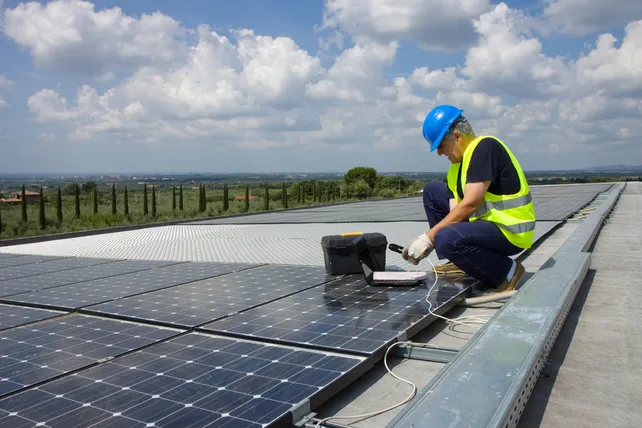
Annual electrical inspections should cover:
- Visual check of all panels, mounting frames, and cabling for damage or degradation
- Inverter performance review and error log analysis
- DC string testing to identify underperforming panels
- Earth continuity and insulation resistance testing
- Checking all isolators, connectors, and cable glands
These inspections catch problems early. A single faulty panel or loose connector can drag down an entire string's output without triggering an obvious alarm.
Inverter Replacement: The Biggest Single Cost
Solar panels typically last 25-30 years, with performance warranties guaranteeing around 85% of original output at year 25. Panel degradation runs at approximately 0.25-0.5% per year -- barely noticeable in practice.
Inverters, however, have a shorter lifespan. String inverters typically last 10-15 years before replacement is needed. Most come with manufacturer warranties of 5-10 years, with extended warranties available at additional cost. Micro-inverters last longer (typically 20-25 years) but cost significantly more upfront and are less common on larger commercial installations.
For a commercial system, budget approximately £100-150 per kW for string inverter replacement. On a 100kWp system, that means setting aside £10,000-15,000 for inverter replacement roughly halfway through the system's life. This is the single largest maintenance expense you will face, so it should be factored into your financial projections from the outset.
Monitoring: Catching Problems Before They Cost You
Modern commercial solar systems include remote monitoring as standard, but it is only useful if someone is actually watching. A monitoring platform tracks real-time generation, compares performance against expected output, and flags anomalies such as inverter faults, string underperformance, or communication failures.
Cloud-based monitoring platforms typically cost £10-50 per month depending on system size and the level of analytics provided. Many O&M providers include monitoring within their service contracts.
The value of monitoring is straightforward: a fault that goes undetected for three months on a 100kWp system generating approximately 850-1,000 kWh/kWp annually could mean thousands of pounds in lost generation. At current commercial electricity rates of 24-34p/kWh, every kilowatt-hour your system fails to produce is money you pay to the grid instead.
O&M Contracts: What to Look For
For commercial installations, a formal O&M contract is strongly recommended. These typically bundle routine inspections, monitoring, cleaning, and reactive call-outs into a single annual fee. When comparing contracts, check for:
- Response times -- how quickly will they attend a fault? 24-48 hours for critical failures is reasonable
- Performance guarantees -- some providers guarantee a minimum energy yield and compensate you for shortfalls
- Scope of cover -- does it include inverter replacement, or only diagnosis and labour?
- Reporting -- regular performance reports help you track ROI and plan ahead
- Compliance -- ensure the provider covers all relevant electrical safety regulations and documentation
A comprehensive O&M contract for a 100kWp system typically falls within the £700-1,500 per year range. Some providers offer tiered packages, with basic monitoring and annual inspection at the lower end and fully managed services including cleaning and guaranteed response times at the higher end.
Budgeting for the Full System Lifecycle
The most common mistake businesses make is budgeting only for the installation and forgetting about ongoing costs. A realistic 25-year maintenance budget for a 100kWp commercial system looks approximately like this:
- Annual O&M (inspections, monitoring, minor repairs): £700-1,500/year
- Cleaning (every 1-2 years): £400-1,500 per clean depending on system size and access
- Inverter replacement (once, around year 10-15): £10,000-15,000
- Total 25-year maintenance cost: approximately £30,000-55,000
Set against a system generating 850-1,000 kWh/kWp annually at 24-34p/kWh, this maintenance spend is comfortably recovered many times over. With typical payback periods of 4-8 years, the remaining 17-21 years of generation represent largely net savings, with maintenance costs being the primary ongoing expense.
Solar installations also qualify for the Annual Investment Allowance, allowing businesses to deduct the full cost (up to £1 million) from taxable profits in the year of purchase. Full expensing provisions under current capital allowances rules further support the financial case. Any surplus electricity exported to the grid earns income under the Smart Export Guarantee, with rates of 5-15p/kWh depending on your supplier.
Next Steps
Understanding maintenance costs upfront helps you make a fully informed investment decision. When requesting quotes for a commercial solar installation, ask each installer about their O&M offerings and ensure inverter replacement costs are reflected in any financial projections they provide. The UK government's Solar Roadmap underlines the continued commitment to expanding solar deployment, making ongoing investment in system performance increasingly worthwhile.
Getting quotes from multiple MCS-certified installers ensures you can compare not just installation prices but the full lifecycle cost of ownership. A well-maintained commercial solar system will deliver reliable returns for decades.