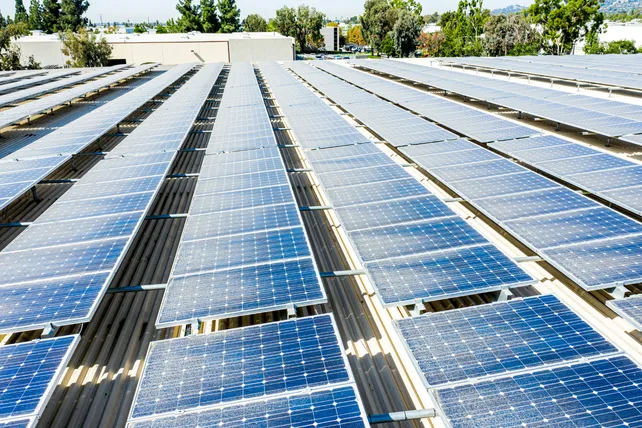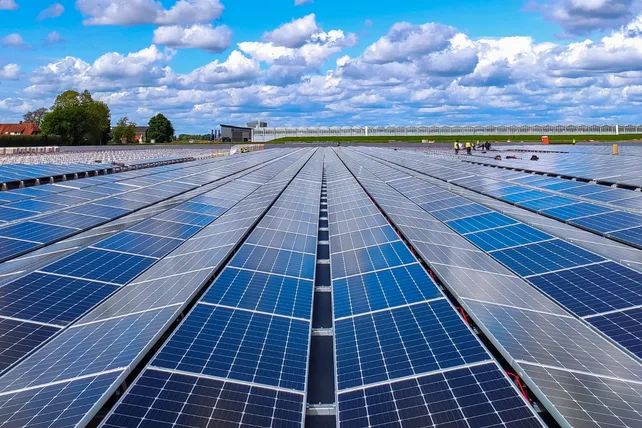
Commercial solar installations offer UK businesses significant tax advantages that can substantially reduce the overall investment cost and improve return on investment. Understanding these benefits is crucial for making informed decisions about solar energy investments.
UK Commercial Solar Capital Allowances Explained
Capital allowances represent one of the most significant tax benefits available to UK businesses investing in commercial solar systems. Under current UK tax legislation, solar panels and associated equipment qualify as plant and machinery, making them eligible for capital allowances claims.
The Annual Investment Allowance (AIA) currently permits businesses to claim 100% tax relief on qualifying plant and machinery investments up to £1 million per year. This means the entire cost of most commercial solar installations can be offset against taxable profits in the year of purchase, providing immediate tax relief.
For larger installations exceeding the AIA threshold, the remaining investment typically qualifies for the main rate pool, allowing 18% writing down allowances each year on a reducing balance basis. This provides ongoing tax relief over multiple years, though at a lower annual rate than the immediate AIA benefit.
VAT Treatment for Business Solar Installations
VAT treatment for commercial solar installations follows standard business rules, with important considerations for different business types and installation sizes.
Most businesses can reclaim VAT on commercial solar installations as input tax, provided the solar system is used for business purposes. This effectively reduces the installation cost by 20% for VAT-registered businesses, representing a substantial saving on the initial investment.
For businesses that generate electricity primarily for their own use, VAT reclaim is typically straightforward. However, businesses planning to export significant amounts of electricity may need to consider VAT registration requirements for electricity sales, particularly if export revenues exceed VAT registration thresholds.
Mixed-use scenarios, where solar systems serve both business and non-business purposes, require careful consideration of partial exemption rules and may limit the amount of input VAT that can be reclaimed.
Corporation Tax Deductions Available
Commercial solar installations offer multiple corporation tax deduction opportunities that can significantly reduce the effective cost of investment.
Capital allowances claimed through AIA or writing down allowances directly reduce taxable profits, providing corporation tax savings equivalent to the current corporation tax rate applied to the allowances claimed. With the current corporation tax rate structure, this can represent savings of 19-25% depending on company size and profit levels.
Ongoing maintenance, insurance, and monitoring costs associated with solar installations qualify as allowable business expenses, providing additional annual tax deductions. Professional fees for feasibility studies, planning applications, and installation management are also typically deductible as pre-trading expenses or business costs.
Interest payments on loans used to finance solar installations qualify as allowable business expenses, further reducing the net cost of debt-financed solar projects.
Enhanced Capital Allowances (ECA) Eligibility
Enhanced Capital Allowances historically provided accelerated tax relief for qualifying energy-saving technologies, though the scheme's current status requires careful consideration.
The Energy Technology List (ETL), which determined ECA eligibility for energy-saving equipment including solar technologies, closed to new applications in recent years. However, existing eligible technologies may still qualify under transitional arrangements.
While specific solar panel ECA benefits may be limited under current arrangements, associated equipment such as energy-efficient inverters, monitoring systems, or integrated battery storage may qualify for enhanced allowances if they meet specific energy efficiency criteria.
Businesses should verify current eligibility with tax advisors, as government policy in this area continues to evolve, and new incentive schemes may be introduced to support clean energy adoption.
First-Year Allowances Considerations
Some solar-related equipment may qualify for first-year allowances under specific circumstances, particularly where installations form part of broader energy efficiency improvements or integrate with other qualifying technologies such as heat pumps or electric vehicle charging infrastructure.
Tax Benefit Application Process
Claiming commercial solar tax benefits requires proper documentation and adherence to specific procedures to ensure compliance with HMRC requirements.
Capital allowances claims must be included in the company's Corporation Tax Return for the accounting period when the solar installation is brought into use. This typically occurs when the system is commissioned and begins generating electricity, rather than when initial payments are made.
Detailed records of all costs are essential, including equipment purchases, installation labour, professional fees, and any associated infrastructure improvements. Separate identification of different asset categories may be beneficial for optimising allowances claims.
VAT reclaims follow standard input tax procedures, with businesses typically reclaiming VAT through regular VAT returns. For significant installations, businesses may consider accelerating VAT reclaims through monthly VAT return arrangements.
Professional tax advice is recommended for complex installations or businesses with specific circumstances such as partial exemption, group structures, or international operations.
Maximising Your Solar Tax Savings
Strategic planning can optimise the tax benefits available from commercial solar investments and maximise overall financial returns.
Timing installations to align with profitable accounting periods ensures maximum benefit from capital allowances, particularly where businesses have fluctuating profits or are approaching the AIA annual limit.
Considering the integration of solar installations with other qualifying investments such as battery storage, EV charging infrastructure, or energy efficiency improvements can provide additional allowances and create synergistic benefits.
For businesses with multiple sites or phased expansion plans, spreading installations across accounting periods may optimise AIA utilisation and manage cash flow effectively.
Long-term Tax Planning
Understanding the interaction between solar investments and broader business tax planning is crucial for maximising benefits. This includes considering the impact of export income on corporation tax liabilities and planning for potential future changes in tax rates or allowance structures.
Regular review of tax positions with qualified advisors ensures businesses continue to optimise their solar investment benefits as circumstances change and new opportunities arise.
Commercial solar tax benefits substantially improve the financial case for solar adoption, but professional guidance ensures these benefits are maximised while maintaining full compliance with UK tax legislation.